
Newburyport's shiny new $8.3 million Recreation and Youth Services Center opens December 1. Congratulations!
Now wouldn't it be wonderful if children living in Newburyport's West End could safely bicycle to the grand opening? Stretch their legs, experience a little independence, and feel that their city had made the journey possible?
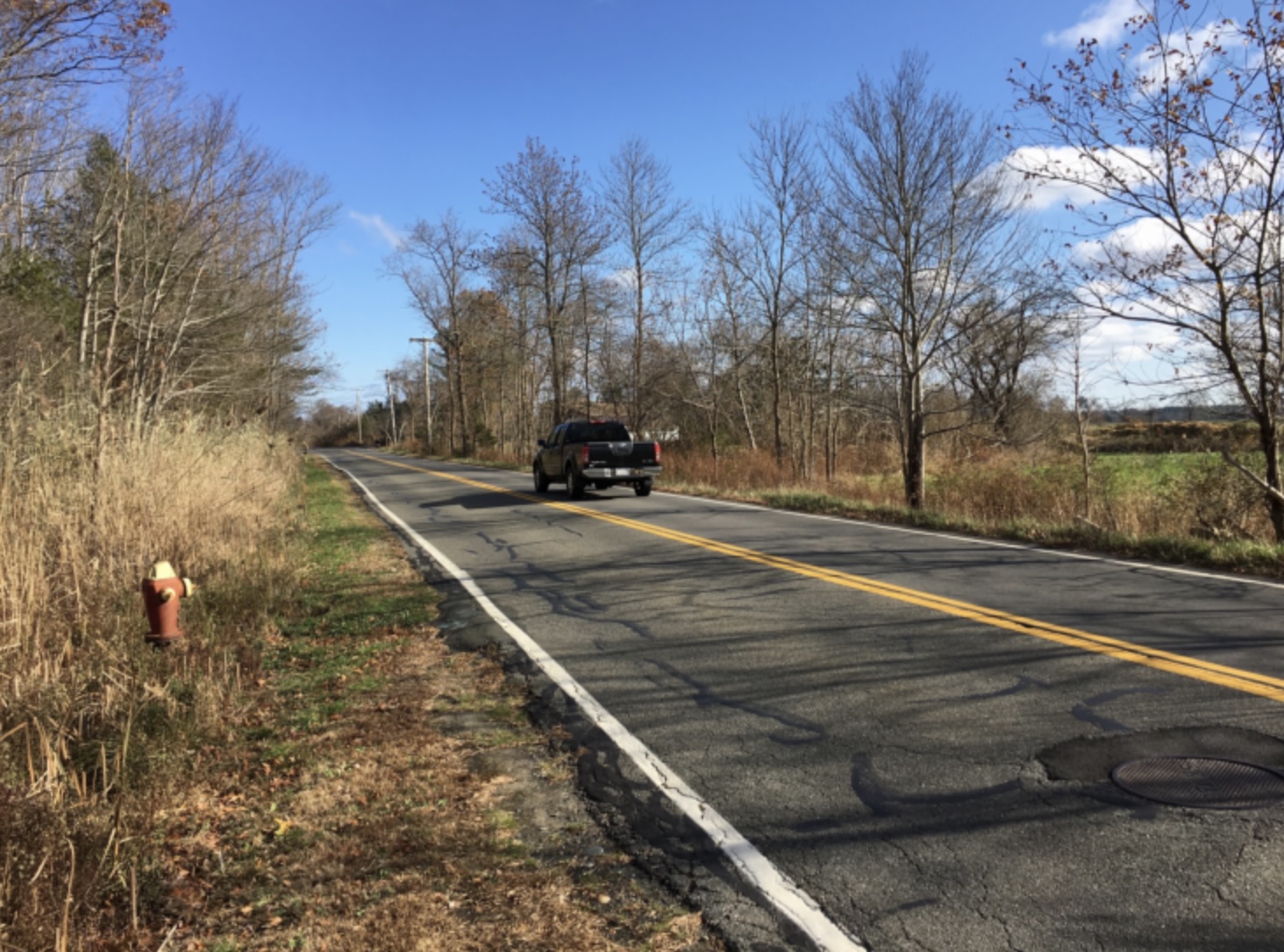
Nope. Not on Hale Street.
No continuous, safe bicycle path currently exists along Hale Street, a direct 1.7-mile corridor from the West End toward the new youth center. The same missing connection affects children's ability to bicycle safely to the Nock-Molin schools, Bresnahan Elementary School, and Newburyport High School.
The Hale Street corridor is home to approximately 930 households, representing 11.5% of Newburyport's occupied households. It is also home to an estimated 463 public school students, representing more than 21% of projected district enrollment. The underlying data, which excludes children attending private schools, was obtained through public records requests in August 2026.
Yet Hale Street isn't just for enrolled students. What about preschoolers? What about adults? The population that stands to benefit extends well beyond public school enrollment.
I live in the West End. If my son wants to bicycle safely near the new youth center, I may have to strap his bicycle to the back of my car and drive him there. Think about the absurdity. We have invested millions in a facility for our children, but many cannot safely reach it independently.
The cost of that missing connection does not appear in Newburyport's capital budget. Instead, it appears on a family's calendar and checking account.
Multiply that experience across West End households. Consider how many cars travel to our schools because children who live within bicycling distance cannot safely make the trip themselves.
A series of decisions helped create West End's automobile dependence. As the West End developed, its looping streets and cul-de-sacs concentrated travel onto a few connecting roads. Interstate 95 further limited those connections. Hale Street became an essential route, but safe pedestrian and bicycle infrastructure never kept pace with residential growth.
At least we can tell the children that the city is planning to build a path.
Well, sort of.
At the November 16 City Council meeting, Councilor Sharif Zeid, chair of the Budget and Finance Committee, pointed out that Hale Street East (the portion nearest to the Nock-Molin schools) was at the bottom of the city's Capital Improvement Plan, although still “above the line.” He referred to approximately $627,000 in planned spending.
The adopted five-year capital plan also includes $2 million for Hale Street West (the section crossing I-95), with design work beginning in 2028 and construction planned for 2030 and 2031. But that construction remains subject to permitting, final design, and funding availability. A projected expenditure is not a guarantee that the pathway will be completed.
At this point, dear reader, could you bear with me for a moment? We need to examine how our city decides which projects deserve priority.
Hale Street East received a prioritization score of 50; Hale Street West, 48.3. But what practical consequences do these scores have, particularly when both projects appear in the adopted Capital Improvement Plan?
Hale Street East received top marks for alignment with the city's Master Plan and its potential to attract outside funding. The application itself acknowledges “hazardous conditions” for schoolchildren, pedestrians, and bicyclists.
Yet the city's scoring system gives the project zero points for environmental sustainability, without explanation. Really?
How does a pathway intended to reduce car trips receive no credit for its potential environmental benefits?
Then there's “Probability of Asset Failure,” a heavily weighted category. Hale Street receives zero points because, as the application explains, “This project does not involve replacing an existing asset.”
What a perfect Catch-22: Hale Street cannot receive points for replacing infrastructure that previous generations never built.
An inherited omission is still an infrastructure problem.
Newburyport has already demonstrated its commitment to pedestrian and bicycle access with the Clipper City Rail Trail, thus connecting the commuter rail station to downtown and the waterfront.
Why shouldn't West End families enjoy the same access to their schools and recreation facilities?
And then there's the big one: Newburyport's proposed $68.1 million water treatment facility replacement. That obligation is real. So is the cost.
But this is not an either-or choice.
A family facing an expensive plumbing replacement does not abandon its obligation to educate its children. The bills may come due at different times and be paid from different sources, but one does not make the other disappear.
A city must think the same way.
Newburyport has legitimate competing priorities. Of course it does. But how long can an essential connection remain unfinished while generations of children grow up without it?
For decades, safe pedestrian and bicycle access along Hale Street has been important. Yet somehow, it has never become urgent enough to finish.
In a recent Daily News article, Mayor Reardon celebrated the city's “sustained investment and a willingness to tackle difficult issues rather than put them off for another day.” Hale Street requires precisely that dedicated leadership and commitment. The city must protect the plans already underway, establish a credible funding and construction timetable for the entire corridor, and finish what it has started.
Planning without a credible path to implementation is the problem.
Newburyport's strength lies in its multigenerational character. But that means more than remembering what previous generations built. The city must take responsibility for what it has left unfinished.
Great job on the Youth Center, Newburyport. Huzzah! But when it comes to Hale Street, it's time to make amends. Let's be intentional about what we leave behind.